
Is 45 vinegar safe for pets? Once treated surfaces are fully dry, yes - acetic acid leaves no toxic residue and the area is safe for dogs and cats. While wet, no. During application and the drying period immediately following, concentrated vinegar poses real risks to both paws and digestive systems. The product does not persist as a toxic residue the way many synthetic herbicides do, which is why timing is the only variable that matters. For a full safety overview of handling 45% vinegar, see Is 45% Vinegar Dangerous? Safety Facts Explained.
SAFE: Once the treated surface is completely dry - typically 1 to 3 hours on a warm, sunny day. No residue. No waiting period beyond full drying.
NOT SAFE: During application and while surfaces are still wet. Paw contact, licking, and inhalation of vapors all carry risk during the wet phase.
What Is the Key Distinction Between Wet and Dry?
According to PubChem (National Institutes of Health) - Acetic Acid, acetic acid dissipates from surfaces as it dries. It does not bind to soil or hard surfaces the way synthetic herbicides do. Once evaporation is complete and the surface is visibly and physically dry, there is no meaningful acid residue remaining to harm a pet that walks across or sniffs the area.
The EPA minimum-risk pesticide program under 40 CFR Part 152 classifies acetic acid as a minimum-risk pesticide active ingredient - a designation reserved for substances with low environmental persistence and low toxicity profiles. The risk window is during application and the drying period immediately following.
• Warm, sunny day (low humidity): most outdoor hard surfaces dry within 1 to 3 hours
• Cool, overcast, or humid conditions: allow up to 4 hours before returning pets
• When in doubt: wait longer and confirm the surface is dry to the touch
What Are the Specific Risks to Dogs and Cats?
The risks are real during the wet phase and nonexistent once fully dry. Timing is everything.
|
Scenario |
Risk to Pets |
Timeline |
Action Required |
|
Pet walks through wet treated surface |
Paw irritation, redness |
During and up to 2 hrs after |
Rinse paws with clean water, monitor |
|
Pet licks wet surface or paws |
Mouth and digestive irritation |
During and up to 2 hrs after |
Rinse mouth with water, contact vet if symptoms persist |
|
Pet inhales vapors during spraying |
Mild respiratory irritation |
During application |
Keep pets indoors during spraying, ventilate before return |
|
Pet rolls on freshly treated grass |
Coat and skin irritation |
During and up to 2 hrs after |
Rinse coat with water, check for skin redness |
|
Pet contacts fully dried treated surface |
No meaningful risk |
After surface is completely dry |
No action required - area is safe |
|
Pet ingests concentrated product directly |
EMERGENCY |
Any time |
Contact vet and ASPCA immediately - do not induce vomiting |
How Do You Use 45% Vinegar Safely in a Yard with Pets?
Five precautions cover every realistic scenario in a pet-occupied yard. For dilution ratios and application techniques, see 45% Vinegar Uses: The Complete Reference Guide.
• Keep pets indoors during application: The simplest and most reliable precaution. Bring dogs and cats inside before you start spraying and keep them there until the treated area is completely dry.
• Treat in sections: For large yards, treat one section at a time and allow each to dry fully before letting pets access it. Pets always have dry, safe areas available even during an ongoing treatment program.
• Apply on warm, sunny days: Higher temperatures and direct sunlight accelerate drying time significantly. A treatment on a warm sunny day may be dry enough for pet access within one to two hours.
• Use precision application near pet areas: For weed control in areas pets regularly use - kennel runs, dog paths, lawn borders - use a direct-stream spray bottle or paintbrush to limit the treated area to the specific weed.
• Rinse hard surfaces before returning pets: For driveways, patios, and other hard surfaces where pets walk, a quick rinse with the garden hose after the initial drying period confirms the surface is safe.
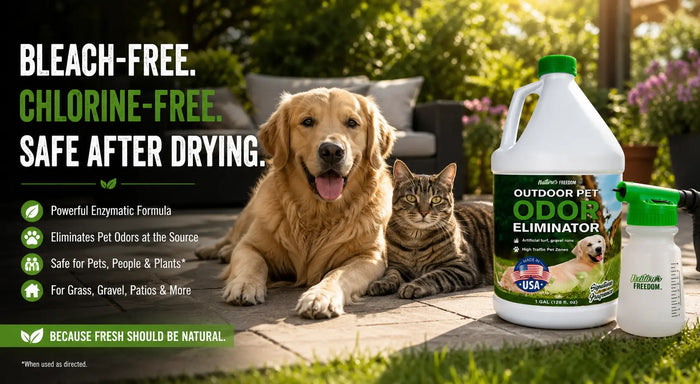
For a complete pet-safe yard maintenance routine, pair 45% vinegar weed control with the Nature's Freedom Outdoor Pet Odor Eliminator - enzyme-based and formulated with no acetic acid.
How Does 45% Vinegar Compare to Glyphosate for Pet Safety?
From a residue persistence perspective, 45% vinegar is significantly safer for pets after drying. Glyphosate persists in soil for days to weeks; acetic acid has no comparable residue period. Read the 45% concentrated vinegar guide.
|
Factor |
45% Concentrated Vinegar |
Glyphosate (Roundup) |
|
Environmental persistence |
Hours - dissipates as it dries |
Days to weeks in soil |
|
Post-dry surface safety |
Safe - no residue |
Residue persists - re-entry interval required |
|
Pet ingestion risk (dried) |
No meaningful risk |
Debated - EPA says low risk at label rates |
|
ASPCA classification |
Mild irritant, not classified toxic |
Listed as potential toxic substance |
|
NSF certified option available |
Yes - Nature's Freedom NSF/ANSI/CAN 60 |
N/A |
What Do You Do If Your Pet Contacts Wet Vinegar?
For general handling safety information relevant to human contact, see Is 45% Vinegar Dangerous? Safety Facts Explained.
Paw Contact
Rinse the paws thoroughly with clean water for two to three minutes. Dry gently. Monitor for redness, excessive licking, or signs of discomfort. Most cases of brief paw contact with diluted working solution produce no symptoms or mild temporary redness that resolves within an hour.
Coat and Skin Contact
Rinse the affected area of coat with clean water. Work the water through to the skin, particularly for dogs with dense coats where the acid could remain trapped against the skin for longer. Monitor for skin redness or excessive scratching.
Eye Contact
Flush the eye with clean water for a minimum of five to ten minutes using a gentle stream. If redness, squinting, or discharge persists after flushing, contact your vet.
Ingestion of Diluted Working Solution
For brief contact with diluted solution (a pet licking wet paws treated with a 1:5 or weaker dilution), monitor for excessive drooling, pawing at the mouth, or vomiting. Contact your vet if symptoms occur or if ingestion was significant.
Ingestion of Undiluted or Concentrated Product
This is an emergency. Contact your vet or the ASPCA Animal Poison Control Center (1-888-426-4435) immediately. Do not induce vomiting.
NSF Certification and Pet Safety
The independently verified concentration in Nature's Freedom 45% Concentrated Vinegar means the safety guidelines in this post are calibrated to the actual product formulation. A product that delivers less than 45% makes every working dilution weaker than expected - but may also behave unexpectedly near pets.
|
Brand |
NSF Certified |
Concentration |
Made in USA |
|
Nature's Freedom |
Yes - NSF/ANSI/CAN 60 |
45% |
Yes |
|
Calyptus |
No |
45% |
Yes |
|
Belle Chemical |
No |
45% |
Unknown |
|
Natural Armor |
No |
45% |
Unknown |
Weed Control and Pet Safety Are Not in Conflict
Now that you know 45 vinegar is safe for pets once dry, the precautions are simple: treat when pets are indoors, wait for full drying, and return with confidence. Nature's Freedom Concentrated Vinegar at 45% is NSF Certified to NSF/ANSI/CAN 60 for drinking water treatment chemicals, made in the USA, and leaves no residue once dry. Order the 45% Concentrated Vinegar - 1 Gallon. Browse the full concentrated vinegar collection, or contact the Nature's Freedom team with questions.
Frequently Asked Questions: Is 45 Vinegar Safe for Pets?
1. How long after applying 45% vinegar can my dog go outside?
On a warm, sunny day, most outdoor hard surfaces are dry and safe for pets within one to three hours. On cool or overcast days, allow a minimum of four hours. Wait until the surface is fully dry to the touch with no detectable vinegar smell before allowing pet access.
2. Is vinegar toxic to dogs if they eat treated grass?
Acetic acid does not persist on grass or soil after it dries. A dog eating dried grass that was previously treated with diluted vinegar is not at meaningful risk. Risk exists only during application and the drying window immediately following.
3. Can cats walk on surfaces treated with 45% vinegar?
Once fully dry, treated surfaces are safe for cats. Paw contact with wet acid can cause irritation, and licking wet paws can cause mild oral irritation. Keep cats indoors during application and until surfaces are completely dry.
4. Is 45% vinegar safer than Roundup for pets?
From a residue persistence perspective, yes. Acetic acid dissipates from surfaces within hours. Glyphosate persists in soil for days to weeks and has a specified re-entry interval before surfaces are considered safe for pets. Both products require keeping pets away during application.
5. What should I do if my dog drinks from a puddle of diluted vinegar?
For a working dilution (1:3 to 1:10), a small amount consumed is likely to cause temporary oral irritation but is unlikely to cause serious harm. Monitor for vomiting, excessive drooling, or signs of distress. Contact your vet if symptoms persist. For concentrated or lightly diluted product, contact the ASPCA Animal Poison Control Center at 1-888-426-4435.
6. Does 45% vinegar smell strong enough to deter pets from treated areas?
Yes, temporarily. The acetic acid smell is strong enough that most dogs and cats avoid recently treated areas on their own during the drying period. This natural aversion provides an additional layer of informal deterrence. The smell dissipates as the acid evaporates and is typically gone before the surface is fully dry.
Key Takeaways
• Is 45 vinegar safe for pets? Once fully dry, yes - acetic acid leaves no toxic residue. During application and while surfaces are still wet, no.
• Drying time is typically 1 to 3 hours on a warm, sunny day and up to 4 or more hours in cool or humid conditions. Wait until the surface is physically dry to the touch before allowing pets back.
• Specific risks during the wet phase include paw irritation, oral irritation from licking wet surfaces, mild respiratory irritation from vapors, and coat and skin contact. All are temporary and manageable with prompt rinsing.
• For concentrated product ingestion, contact the ASPCA Animal Poison Control Center (1-888-426-4435) immediately. Do not induce vomiting.
• 45% vinegar has significantly shorter post-application residue persistence than glyphosate-based herbicides, making the effective safety window for pets much shorter.
• Nature's Freedom Outdoor Pet Odor Eliminator contains no acetic acid and is safe for use on grass without restriction. The right companion product for pet areas in the yard.