
Is 45 vinegar dangerous? It is corrosive at full concentration and requires protective equipment during handling. It is not dangerous when used correctly with appropriate dilution and precautions, and it is not in the same risk category as bleach, ammonia, or synthetic herbicides. Skin and eye contact with undiluted liquid are the primary hazards. Inhalation risk is low under normal outdoor or well-ventilated indoor use. This guide covers exactly what the risks are, the protective equipment required, first aid steps for accidental exposure, and what you must never mix it with. For all dilution ratios by task, see the 45% Vinegar Uses guide.
What Makes 45% Vinegar Corrosive?
45% acetic acid is classified as a corrosive substance because it disrupts proteins and cell membranes on contact - the same property that makes it an effective weed killer and descaling agent.
According to PubChem (National Institutes of Health) - Acetic Acid, acetic acid at this concentration lowers the pH of any surface it contacts sharply, disrupting cell membranes on contact. The key distinction from truly dangerous chemical products is that acetic acid is not volatile the way bleach fumes or ammonia vapors are. At room temperature, 45% vinegar does not release hazardous fumes at concentrations high enough to pose an inhalation risk under normal outdoor or well-ventilated indoor use.
The EPA minimum-risk pesticide program under 40 CFR Part 152 classifies acetic acid as a minimum-risk pesticide active ingredient - a designation reserved for substances with low toxicity profiles in normal use conditions. 45% vinegar is not in the same risk category as most synthetic herbicides, but it is strong enough to demand respect during handling.
What Is the Risk Level by Exposure Route?
The hazard level varies significantly depending on how contact occurs. Eye contact is the highest-priority risk.
|
Exposure Route |
Risk Level |
What Happens |
Required Action |
|
Skin contact (undiluted) |
Moderate |
Irritation, redness, possible chemical burn with prolonged contact |
Flush with water for 15 minutes immediately |
|
Eye contact (any strength) |
HIGH |
Serious irritation, pain, possible corneal damage |
Flush with water for 15+ minutes - seek medical attention immediately |
|
Inhalation (normal use) |
Low |
Mild irritation to nose and throat in confined spaces |
Move to fresh air - symptoms typically resolve quickly |
|
Inhalation (heated product) |
Moderate |
Acetic acid vapors increase significantly when heated |
Use in ventilated space - do not heat undiluted product |
|
Ingestion |
HIGH |
Severe irritation to mouth, throat, and digestive tract |
Do not induce vomiting - seek emergency medical attention |
|
Diluted working solutions (1:10+) |
Low |
Minor irritation at most for most dilutions |
Rinse skin promptly - standard precautions apply |
What Protective Equipment Is Required?
Nitrile or rubber gloves, safety glasses with side shields, and adequate ventilation are required for any handling of undiluted 45% concentrated vinegar. This is not optional guidance.
Gloves: Nitrile gloves at minimum. Latex gloves offer less acid resistance and are not recommended for prolonged handling. Heavy-duty rubber gloves are appropriate for extended or high-volume work. Gloves should extend past the wrist.
Eye protection: Safety glasses with side shields are the minimum. Chemical splash goggles are strongly recommended when pouring concentrated product or in any situation where spray-back is possible. Standard prescription glasses do not provide adequate splash protection.
Ventilation: Work outdoors or in a well-ventilated space. Indoors, open windows and run a fan. Avoid enclosed spaces with limited airflow, particularly when heating diluted solutions for appliance descaling.
Clothing: Wear long sleeves and closed-toe shoes when working with undiluted product. Concentrated acetic acid on fabric causes discolouration and can degrade natural fibres with prolonged contact.
What Are the First Aid Steps for Accidental Contact?
Skin Contact
Remove any contaminated clothing immediately. Flush the affected area with large amounts of running water for a minimum of 15 minutes. If irritation or redness persists after flushing, seek medical attention. For large area contact or signs of chemical burn (blistering, intense pain), seek emergency medical care.
Eye Contact
This is the highest-priority first aid scenario. Flush both eyes with large amounts of clean water immediately. Hold the eye open under a gentle stream of running water and flush continuously for at least 15 minutes. Seek immediate medical attention after flushing. Do not rub the eye. Permanent corneal damage is possible with delayed treatment.
Inhalation
Move immediately to fresh air. In most normal use scenarios, symptoms resolve quickly once away from the source. If symptoms persist or the person has difficulty breathing, seek medical attention. Heated acetic acid vapors are more concentrated and may require medical evaluation even after moving to fresh air.
Ingestion
Do not induce vomiting. The acid causes additional damage to the esophagus on the way back up. Give water or milk to dilute if the person is conscious and able to swallow. Contact Poison Control immediately (1-800-222-1222 in the US) and seek emergency medical care.
Read our 45% vinegar safety and uses guide.
What Must You Never Mix With 45% Vinegar?
Three mixing errors must be avoided. Two produce genuinely hazardous outcomes; one simply neutralizes both products.
NEVER MIX WITH BLEACH (SODIUM HYPOCHLORITE): The combination of acetic acid and bleach produces chlorine gas - toxic even in small concentrations. This reaction occurs at room temperature with no warning. Never store or use bleach and concentrated vinegar in the same area during active use.
NEVER MIX WITH HYDROGEN PEROXIDE IN THE SAME CONTAINER: Combining acetic acid and hydrogen peroxide produces peracetic acid - a much stronger oxidizer than either ingredient alone that is corrosive and irritating at the concentrations produced. Use them separately, on different surfaces, at different times.
Do not mix with baking soda: Acetic acid and sodium bicarbonate neutralize each other, cancelling the cleaning power of both products. Not a safety hazard, but a waste of product.
How Do You Store 45% Concentrated Vinegar Safely?
• Container: Keep in the original sealed container. 45% vinegar is safe in HDPE plastic, glass, and stainless steel. Do not transfer to aluminum containers - acetic acid reacts with aluminum, producing hydrogen gas in an enclosed container.
• Location: Store in a cool, dry place away from direct sunlight and heat sources. Keep out of reach of children. Do not store near bleach, ammonia, or other cleaning products that could be accidentally mixed.
• Temperature: Do not freeze or expose to sustained heat above 40 degrees C. Freezing can compromise container integrity. Sustained heat can increase vapour pressure inside the container.
• Shelf life: Properly stored 45% concentrated vinegar retains full potency for two or more years under normal conditions.
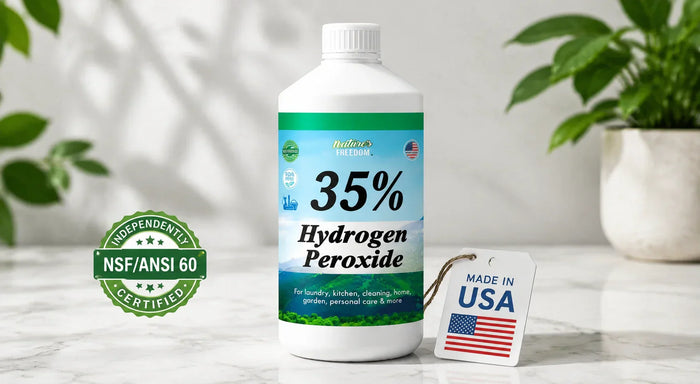
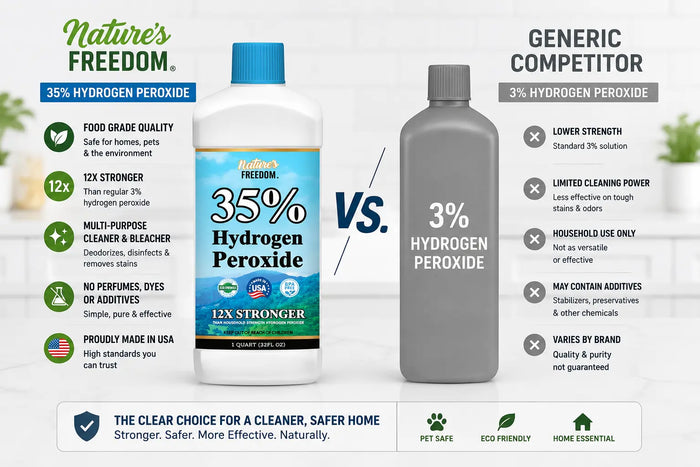
For other Nature's Freedom products, the 35% hydrogen peroxide solution should similarly be stored in a cool, dark location, away from concentrated vinegar and away from any organic material that could catalyze decomposition.
Why Does NSF Certification Matter for Safety?
When the product genuinely contains 45% acetic acid - confirmed by independent third-party verification - the safety precautions in this guide are calibrated to the actual product in your hands. Nature's Freedom 45% Concentrated Vinegar is NSF Certified to NSF/ANSI/CAN 60 for drinking water treatment chemicals, with independent verification of formulation and purity.
|
Brand |
NSF Certified |
Concentration |
Made in USA |
|
Nature's Freedom |
Yes - NSF/ANSI/CAN 60 |
45% |
Yes |
|
Calyptus |
No |
45% |
Yes |
|
Belle Chemical |
No |
45% |
Unknown |
|
Natural Armor |
No |
45% |
Unknown |
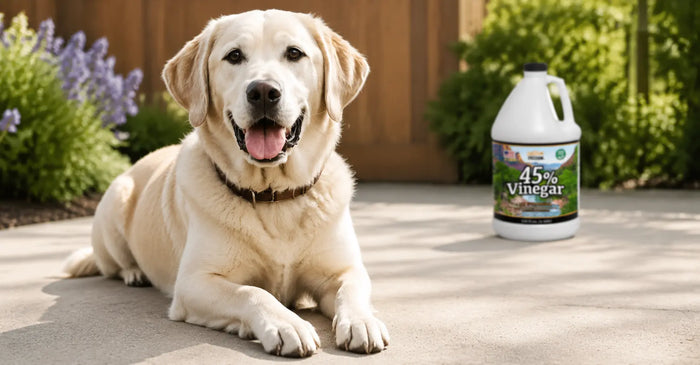
Nature's Freedom 45% Concentrated Vinegar includes clear DANGER labeling, handling instructions, and first aid information on every bottle. For households with pets and children, the Outdoor Pet Odor Eliminator is formulated without acetic acid and requires no special handling precautions.
Safe to Use. Powerful Enough to Work.
The answer to is 45 vinegar dangerous is the same as any powerful tool: it depends on how you use it. Follow the precautions in this guide and Nature's Freedom Concentrated Vinegar is one of the safest powerful cleaners you can keep in your kit. It is NSF Certified to NSF/ANSI/CAN 60 for drinking water treatment chemicals, made in the USA, with safety labeling built in. Order the 45% Concentrated Vinegar - 1 Gallon. Browse the full concentrated vinegar collection, or contact the Nature's Freedom team with questions.
Frequently Asked Questions: Is 45% Vinegar Dangerous?
1. Can 45% vinegar burn your skin?
Yes. Undiluted 45% acetic acid is classified as a corrosive substance and can cause chemical burns with prolonged skin contact. Brief contact typically produces redness and irritation. Flush immediately with large amounts of water for 15 minutes. Wear nitrile or rubber gloves whenever handling undiluted product.
2. Is it safe to breathe 45% vinegar fumes?
Under normal outdoor or well-ventilated indoor use, the acetic acid vapors from 45% vinegar do not pose a significant inhalation hazard. Brief exposure produces mild throat and nasal irritation. The risk increases significantly in enclosed spaces, when the product is heated, or during heavy-volume spraying without ventilation.
3. What happens if you get 45% vinegar in your eyes?
Eye contact with 45% vinegar is a medical emergency. Flush immediately with large amounts of clean water for a minimum of 15 minutes, holding the eye open throughout. Seek medical attention after flushing. Do not rub the eye. Permanent corneal damage is possible with delayed treatment.
4. Is diluted 45% vinegar safe to handle without gloves?
At working dilutions of 1:10 or weaker (approximately 4% acidity or less), brief skin contact is unlikely to cause more than mild irritation in most people. For sensitive skin or prolonged contact, gloves are still recommended. Always wear gloves and eye protection when handling the undiluted product, regardless of the intended dilution.
5. Is 45% vinegar safe for the environment?
Acetic acid dissipates rapidly in soil and water through microbial breakdown and does not accumulate or persist in the environment. The EPA Safer Choice program recognizes acetic acid's favorable safety profile compared to conventional herbicide alternatives. It is widely used in certified organic agriculture and is significantly more environmentally benign than synthetic herbicides and most commercial cleaning chemicals.
6. How is 45% vinegar different from 5% household vinegar in terms of safety?
The safety requirements are fundamentally different. 5% household vinegar is safe for skin contact, is non-corrosive, and requires no protective equipment. 45% vinegar is nine times more concentrated, classified as corrosive, and requires gloves, eye protection, and ventilation during handling. The household version is food-safe. The 45% version is not for human consumption under any circumstances.
Key Takeaways
• Is 45 vinegar dangerous? It is corrosive at full concentration and can cause skin irritation, chemical burns with prolonged contact, and serious eye injury. It is not safe to handle without protective equipment. Read our 45% vinegar safety guide.
• The primary hazards are skin and eye contact with liquid. Inhalation risk is low under normal outdoor or ventilated indoor use. Ingestion requires immediate emergency medical attention - contact Poison Control at 1-800-222-1222.
• Required protective equipment for any handling of undiluted product: nitrile or rubber gloves, safety glasses with side shields, and adequate ventilation.
• SAFETY: Never mix with bleach (produces toxic chlorine gas) or with hydrogen peroxide in the same container (produces corrosive peracetic acid).
• Properly diluted working solutions at 1:10 or weaker are safe for normal household use with standard precautions. The undiluted product must always be handled as a corrosive acid.
• Nature's Freedom is the only concentrated vinegar brand certified to NSF/ANSI/CAN 60 for drinking water treatment chemicals, providing independently verified formulation and clear safety labeling on every bottle.