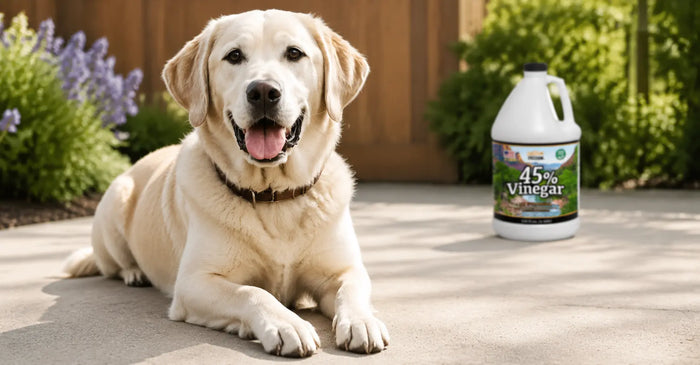

Use 45% concentrated vinegar, apply it on a sunny dry day, and target the foliage directly. For the full science behind why concentration determines results, see the Vinegar Weed Killer guide.
• For annual weeds in pavement cracks: 1:2 to 1:3 dilution.
• For established perennials: undiluted or 1:1.
• The three variables that determine success: concentration, conditions, and technique. Miss any one and you will be re-treating the same driveway crack two weeks later.
What Do You Need Before You Start?
Four things determine the outcome before you spray. Getting the setup right is half the job. Read the complete guide to 45% concentrated vinegar here.
45% Concentrated Vinegar
Standard 5% white vinegar from the grocery store is not strong enough for reliable weed control. You need 45% acetic acid - nine times stronger and capable of damaging plant tissue at depth. If you need to understand why concentration matters before buying, see Does Vinegar Kill Weeds? The Honest Answer.
According to PubChem (National Institutes of Health) - Acetic Acid, acetic acid disrupts plant cell membranes on contact, lowering pH and causing rapid moisture loss. The EPA minimum-risk pesticide program recognizes acetic acid as an approved active ingredient for herbicide use.
A Pump Sprayer or Spray Bottle
For large areas like driveways and gravel paths, a 1-gallon pump sprayer with an adjustable nozzle gives even coverage. For precision work near lawns or garden beds, a small handheld spray bottle or a paintbrush gives you control to target individual weeds without drift.
Protective Gloves and Eye Protection
45% acetic acid is corrosive. It can cause skin irritation and serious eye damage on direct contact with undiluted product. Gloves and safety glasses are required, not optional.
A Dry, Sunny Day
Sunlight and heat are active ingredients in this process. They accelerate the desiccation effect significantly. Rain washes the acid off before it can work. Check the forecast before you start.
Which Vinegar Should You Choose for Weed Control?
Not all concentrated vinegar products are equal. NSF certification is the only independent verification that the product contains what the label claims. Nature's Freedom 45% Concentrated Vinegar is the only option in this category certified to NSF/ANSI/CAN 60 for drinking water treatment chemicals.
|
Brand |
NSF Certified |
Concentration |
Made in USA |
|
Nature's Freedom |
Yes - NSF/ANSI/CAN 60 |
45% |
Yes |
|
Calyptus |
No |
45% |
Yes |
|
Belle Chemical |
No |
45% |
Unknown |
|
Natural Armor |
No |
45% |
Unknown |
Nature's Freedom Concentrated Vinegar is the only NSF Certified to NSF/ANSI/CAN 60 option in this category. For weed control where you need consistent, predictable results, that verification matters.
What Dilution Ratio Should You Use?
The right dilution depends on what you are treating. Too weak and it does not work; too strong on the wrong surface wastes product.
|
Target Surface or Weed Type |
Dilution (45% to Water) |
Working Strength |
Notes |
|
Annual weeds in pavement cracks |
1:2 to 1:3 |
11-15% |
Single application usually sufficient |
|
Established dandelions or perennials |
1:1 or undiluted |
22-45% |
Spot treat crown directly |
|
Gravel driveways and paths |
1:3 |
~11% |
Use pump sprayer for coverage |
|
Moss on hard surfaces |
1:3 to 1:5 |
7-11% |
Dwell 30 min then brush away |
|
Lawn edge weeds (precision) |
Undiluted |
45% |
Paintbrush application only |
|
Fence lines and large areas |
1:4 |
~9% |
Repeat if regrowth appears in 7 days |
Mixing note: Always add the vinegar to water, not water to vinegar. Use a glass, HDPE plastic, or stainless steel container. Avoid aluminum, which reacts with acetic acid.
How Do You Kill Weeds With Vinegar Step by Step?
Follow these steps in order. Each one affects the result of the next.
1. Check the weather. You need a minimum of 24 hours with no rain after application. Bright sun and temperatures above 60 degrees F produce the fastest kill. Overcast conditions slow the process significantly.
2. Mix your solution. Use the dilution table above for your specific target. For most driveway and path weed jobs, a 1:2 or 1:3 ratio is the right starting point.
3. Fill your sprayer. Pressurize a pump sprayer before heading outside. Set the nozzle to a fine mist for even foliage coverage. A wide spray pattern wastes product on soil and reduces effectiveness.
4. Apply directly to the foliage. Saturate the leaves and stems of each weed completely. The acid needs to contact the plant to work. Spraying only the soil around the plant has minimal effect.
5. Work in sections. Treat one area fully before moving to the next. This prevents accidentally walking through treated weeds and spreading acid onto plants you want to keep.
6. Keep pets and children away from treated areas until completely dry. Drying time is typically one to three hours depending on temperature and humidity.
7. Inspect after 24 to 48 hours. Annual weeds should show visible browning and collapse. If a weed is still green at 48 hours, apply a second coat at a stronger dilution or undiluted.
8. Remove dead material. Once weeds are visibly dead, pull or sweep away dried plant material before it drops seeds onto bare soil.
Which Surfaces and Situations Work Best for Vinegar Weed Control?
Vinegar works best where you are not worried about surrounding plants. It is non-selective and will damage anything green it contacts.
• Driveways and concrete - ideal. Weeds in expansion joints, cracks, and along edges die reliably. The acid evaporates from hard surfaces quickly and leaves no residue.
• Gravel paths and driveways - excellent. Persistent weed growth responds well to repeated seasonal treatment. A 1:3 dilution applied with a pump sprayer covers large areas efficiently.
• Patio pavers and stepping stones - good. Weeds growing between joints and along edges are well-suited to targeted spray application. Avoid contact with mortar - repeated acid application can degrade grout over time.
• Fence lines - good. Consistent treatment along fence bases keeps grass and weeds suppressed without chemicals that could drift into adjacent garden beds.
• Near lawn edges - precision application only. Vinegar will kill lawn grass just as effectively as weeds. Use a spray bottle set to a direct stream or a paintbrush for any treatment within 30 centimetres of turf you want to preserve.
• Garden beds - not recommended for broadcast spraying. Use extreme precision if treating individual weeds among cultivated plants. A small brush applicator is the only safe method in planted areas.
What Are the Common Mistakes When Killing Weeds With Vinegar?
• Using 5% household vinegar. The single most common reason treatments fail. Grocery store vinegar at 5% acetic acid does not carry enough active ingredient for reliable outdoor weed control. Switch to 45% concentrated vinegar.
• Spraying before rain. Even a light shower within a few hours of application washes the acid off the leaves before it has time to work. Always check a 24-hour forecast.
• Spraying on a cool, cloudy day. Acetic acid desiccation is accelerated by heat and sunlight. A cloudy 55 degree F day will produce much slower results than a clear 80 degree F afternoon. Wait for the right conditions.
• Expecting one treatment to eliminate perennial weeds. Established dandelions, thistle, bindweed, and similar perennials have deep root systems that survive surface acid treatment. Plan for two to four applications spaced several days apart.
• Applying to wet foliage. Morning dew or irrigation on leaves dilutes the acid on contact, reducing its effective concentration before it can work. Apply only to dry foliage.
Is Vinegar Safe to Use Around Pets?
Yes, once treated surfaces are fully dry. Acetic acid leaves no toxic residue and dissipates rapidly, unlike glyphosate which persists in soil.
During application and while the surface is still wet, keep pets away. Direct contact with concentrated or recently applied vinegar can cause paw and skin irritation. A dog or cat that licks fresh application may experience digestive discomfort. Once dry, the treated area is safe.
For full yard care that combines weed control with pet odor treatment, Nature's Freedom also produces an Outdoor Pet Odor Eliminator formulated for lawns, kennels, and outdoor hardscaping.
You Have the Process. Now Get the Right Product.
Nature's Freedom Concentrated Vinegar at 45% acetic acid is NSF Certified to NSF/ANSI/CAN 60 for drinking water treatment chemicals, made in the USA, and built to perform on every surface in this guide. Order yours and put the process to work. Questions? Contact Nature's Freedom.
Frequently Asked Questions About Killing Weeds With Vinegar
1. How long does it take to kill weeds with vinegar?
On a warm, sunny day, wilting and browning begin within two to six hours. Annual weeds usually collapse fully within 24 hours. Perennial weeds with established root systems may take 48 to 72 hours to show complete surface dieback, and new growth from the root can appear within one to two weeks, requiring a follow-up application.
2. Do you need to dilute vinegar to kill weeds?
For most annual weed applications, yes. A 1:2 or 1:3 dilution of 45% vinegar creates a working solution strong enough to kill young weeds efficiently while covering more area per gallon. For established perennials or moss, undiluted or lightly diluted application gives better results. Never use undiluted 45% vinegar on surfaces where runoff could contact plants you want to keep.
3. Will vinegar kill weed seeds in the soil?
Vinegar applied to the surface does not penetrate deep enough to reliably kill dormant seeds. It kills germinated plants on contact but does not act as a pre-emergent herbicide. Regular seasonal treatment is the practical approach to managing seed banks in treated areas.
4. Can you spray vinegar on weeds in a lawn?
Vinegar is non-selective. It will kill lawn grass and weeds equally. Do not broadcast spray vinegar in lawn areas. For individual weeds growing in turf, use a small spray bottle aimed directly at the weed, or apply with a paintbrush to avoid contact with surrounding grass.
5. What is the best vinegar to kill weeds?
45% horticultural or concentrated vinegar produces the most reliable results. Standard household vinegar at 5% is not strong enough for consistent outdoor weed control. Nature's Freedom 45% Concentrated Vinegar is NSF Certified to NSF/ANSI/CAN 60 for drinking water treatment chemicals, made in the USA, and formulated specifically for outdoor herbicide applications.
6. How often should you apply vinegar to kill weeds?
For annual weeds in hard surface areas, one to two applications per season is usually sufficient. For persistent perennial weeds, apply every three to five days until the plant no longer shows regrowth. For moss on hard surfaces, a single annual or semi-annual treatment in dry conditions is typically enough to keep growth suppressed.
Key Takeaways
• Killing weeds with vinegar works reliably when you use 45% concentrated vinegar, not the 5% grocery store version, which lacks the acidity for consistent results.
• Apply on a sunny, dry day with no rain in the 24-hour forecast. Heat and sunlight are essential accelerants in the desiccation process.
• Dilute to the appropriate ratio for your surface. Annual weeds in hard surfaces respond well to 1:2 or 1:3 dilutions. Established perennials need undiluted or 1:1 application.
• Target foliage directly. Soil-only application is ineffective. The acid must contact the plant to work.
• Nature's Freedom is the only concentrated vinegar brand in this category certified to NSF/ANSI/CAN 60 for drinking water treatment chemicals, making it the verified choice among Calyptus, Belle Chemical, and Natural Armor.
• Perennial weeds require multiple applications. Plan for two to four treatments spaced several days apart for meaningful suppression of established root systems.